Understanding Self-Regulation Development
What Self-Regulation Looks Like at Every Age
Self-regulation develops slowly — the prefrontal cortex isn't fully developed until age 25. Understanding what's developmentally realistic at each stage helps parents choose the right books and set the right expectations.
👶
Ages 2–3
Tantrums are neurologically normal — not manipulative. The goal at this age is co-regulation: a calm adult staying present helps a flooded child's nervous system return to baseline. Books modeling calm, warm parents are the best self-reg tools for this age.
🧠
Ages 4–5
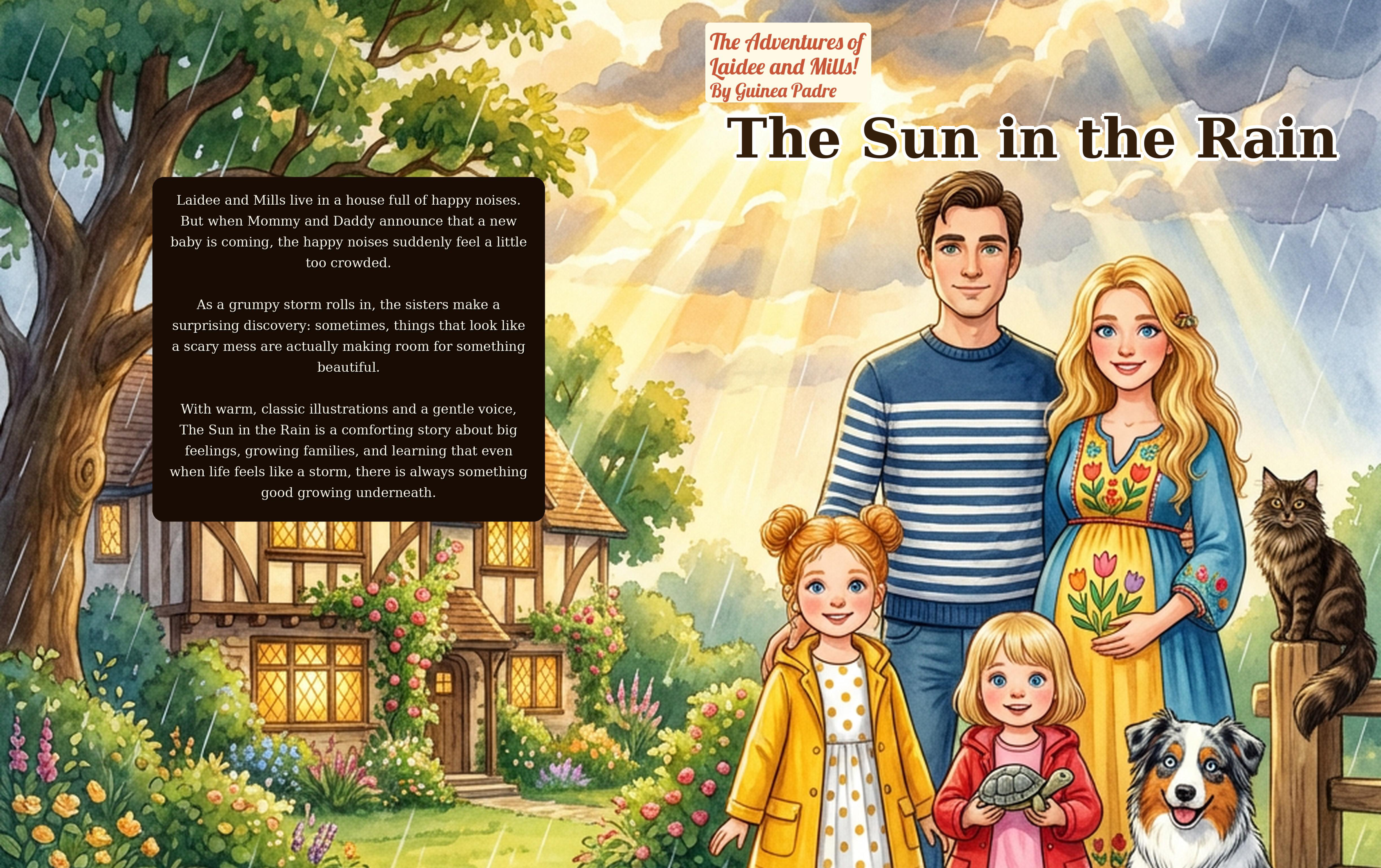
Children begin to name emotions and recognize physical signals. The Sun in the Rain works perfectly here — Laidee's visible disappointment followed by visible reframing gives preschoolers a template they can see and copy in their own daily lives.
💪
Ages 5–7
Children begin using simple strategies: deep breaths, taking a walk, naming the feeling. A Fintastic Day at the Aquarium models this perfectly — Mills uses curiosity as a self-regulation tool, turning fear into wondering what comes next.
📚
How Books Help
Books build emotional vocabulary — the naming capacity that makes regulation possible. A child who can say 'I feel disappointed' has already taken the first step toward managing that feeling. Read-aloud is the most powerful emotional vocabulary builder at every age.
💡 Guinea Padre tip: Both Guinea Padre books model the complete self-regulation cycle. The Sun in the Rain: disappointment → pause → reframe → joy. A Fintastic Day: nervous excitement → wonder → engagement → delight. Reading both gives children two distinct regulatory templates — one for loss and change, one for challenge and the new. Together they cover the full emotional landscape of early childhood.